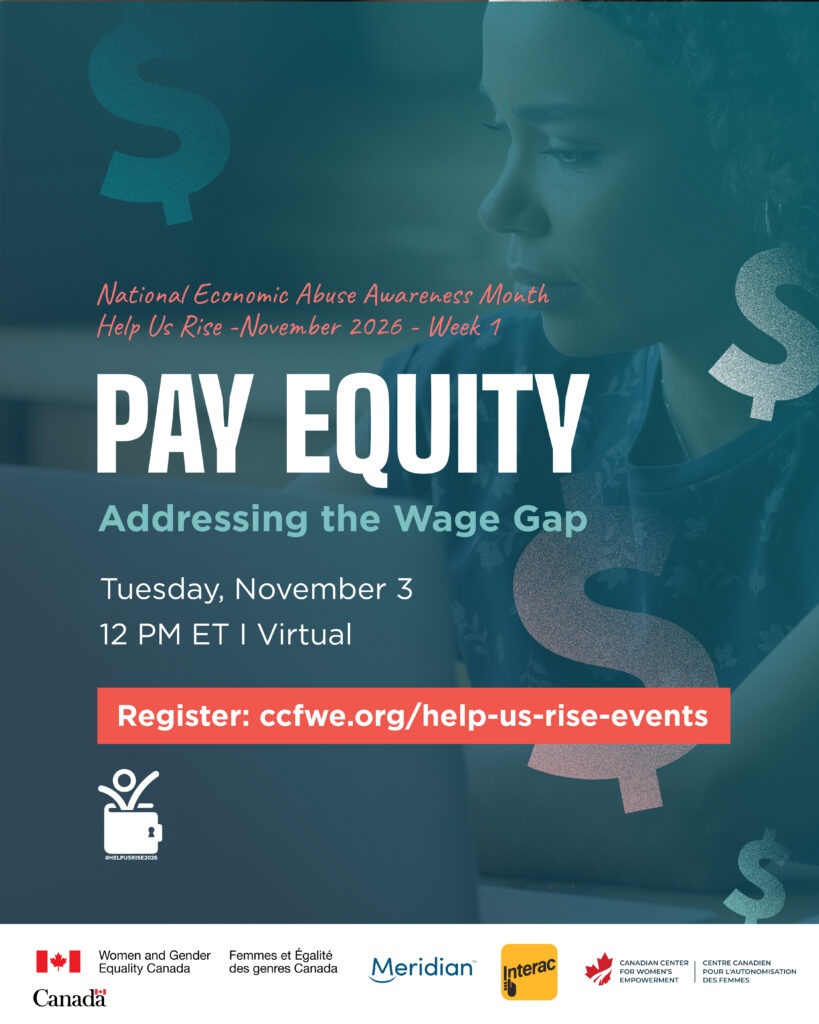
Tuesday, November 3, 2026 | 12:00pm ET | Virtual
For people who experience economic financial abuse and exploitation, pay equity and wage gaps aren’t just a workplace issue; they’re a barrier to leaving, recovering from, and staying free of an abusive relationship. Lower earnings, interrupted careers, and unequal pay compound the financial precarity that economic abuse creates, making long-term independence harder to reach.
Join CCFWE to explore how closing the wage gap can serve as a concrete lever for survivors’ financial safety and independence. This webinar will look at the existing economic impact of the wage gap, how this intersects with gender-based violence and economic abuse, and the current policy context in Canada. It will outline policy and systems-level changes needed to advance pay equity, and how employers, policymakers, and advocates can work together to ensure fair pay translates into real financial security for those rebuilding their lives after economic abuse.
This event will share our new report, Achieving Pay Equity for Women in Canada: Advancing Economic Justice, Safety and Financial Security.
You’ll hear about:
Speakers:
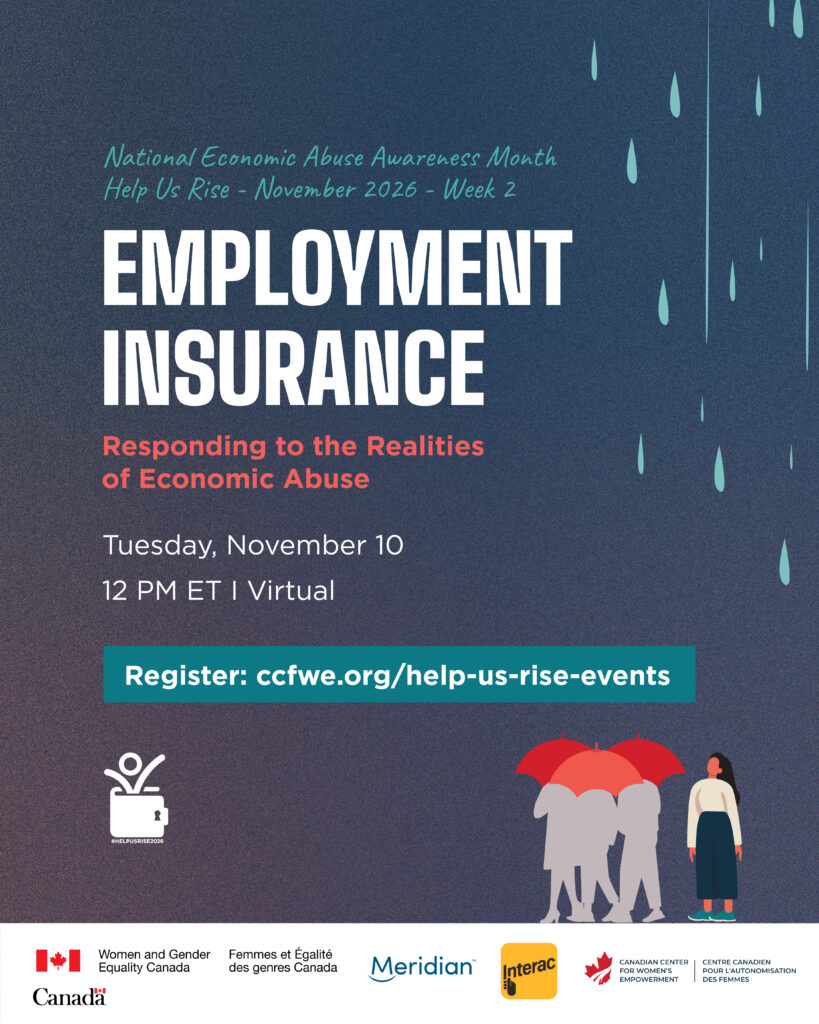
Tuesday, November 10, 2026 | 12:00pm ET | Virtual
Employment Insurance is meant to be a safety net, but for people experiencing economic abuse, that net often has major rips. Coerced unemployment, interrupted work histories, and the practical realities of leaving an abusive relationship can leave survivors ineligible for support or navigating a system that wasn’t designed with their experiences in mind.
Join CCFWE for a conversation on how Employment Insurance can better reflect the realities faced by survivors of economic abuse. This webinar will examine where current EI policy falls short for survivors, and what reforms could reduce barriers and support financial recovery for people rebuilding their independence. It will build on our recent report, Employment Insurance and Economic Abuse: A critical review of Canada’s financial safety net.
You’ll hear about:
Speakers:
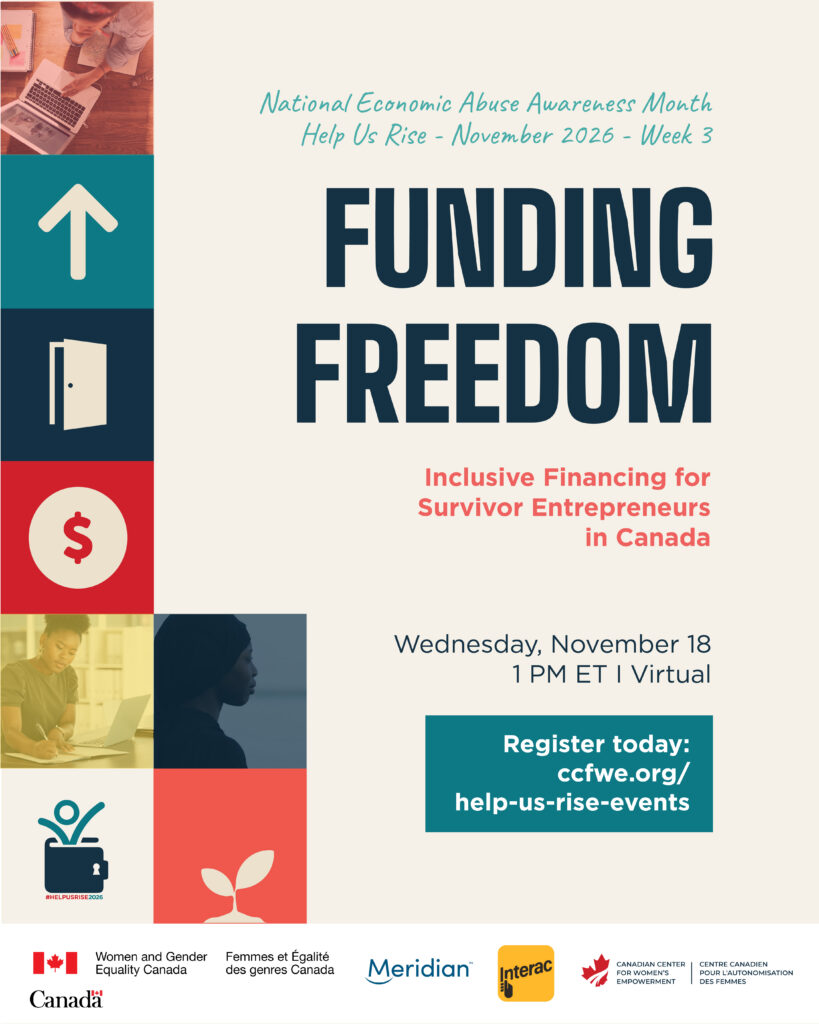
Wednesday, November 18, 2026 | 1:00pm ET | Virtual
For many people with experiences of gender-based and economic abuse, entrepreneurship offers a path to independence, stability, and self-determination. Yet access to financing remains out of reach for many, shaped by discriminatory lending practices, rigid eligibility criteria, and social stigma.
Join CCFWE for a closer look at its recently released playbook Safe Capital: Advancing Survivor Entrepreneurship and Financial Inclusion in Canada, examining the structural barriers survivors face in accessing microloans and financing, and what more inclusive, trauma-informed lending could look like. Drawing on lived experience from CCFWE’s sharing circles and an environmental scan of microloan programs across the country, the playbook offers concrete recommendations for the federal government, financial institutions and lenders, and community organizations.
This webinar will bring together CCFWE with voices from survivor entrepreneurs and community-based microloan providers to discuss the playbook’s findings and what it will take to close the gap between existing financial support and the realities of survivors rebuilding their financial lives.
You’ll hear about:
Speakers:
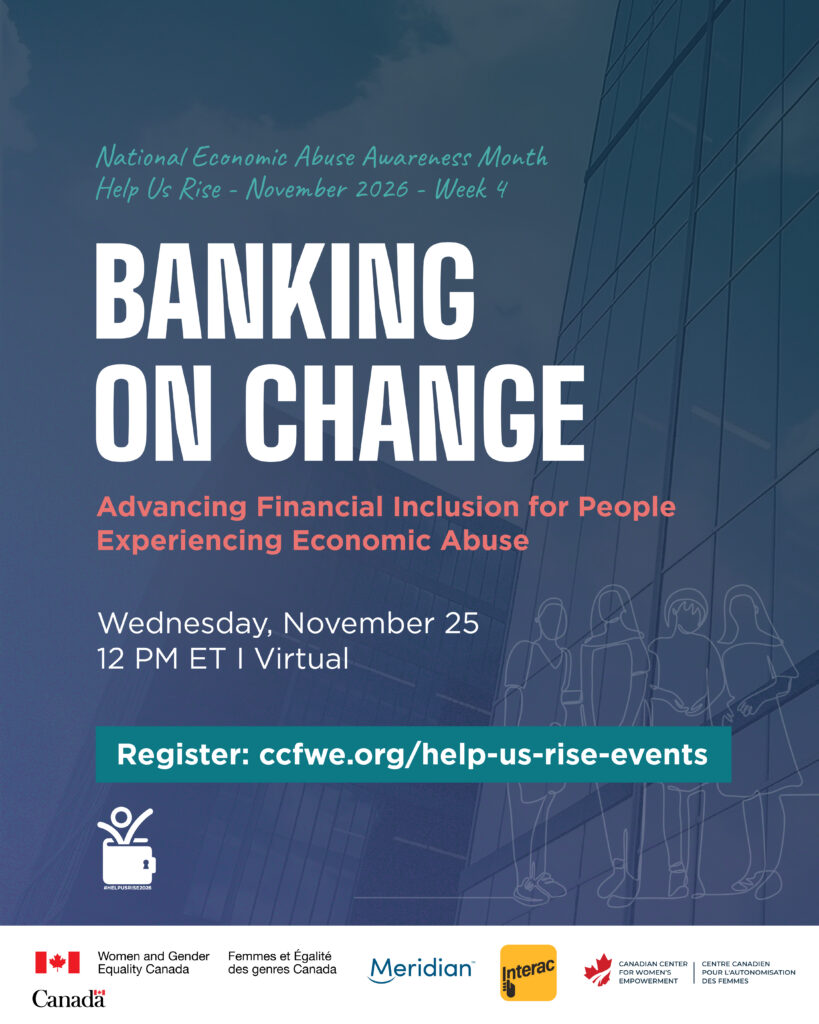
Wednesday, November 25, 2026 | 1:00pm ET | Virtual
As part of CCFWE’s 2026 annual national economic abuse awareness campaign, Help Us Rise, this panel brings together voices from government, financial institutions, regulators, community service providers, and people with lived experience of economic abuse. Together, they’ll identify opportunities to strengthen inclusive and equitable banking, financial literacy, and consumer protection. They will also discuss ways to improve fraud prevention and access to safe financial products and services for people experiencing or recovering from economic abuse, including coerced debt and financial exploitation.
Economic abuse remains one of the least understood forms of gender-based violence in Canada, yet its impact on financial security can last long after a survivor has left an abusive relationship. Coerced debt, damaged credit scores, control of bank accounts, and restricted access to financial services create lasting barriers to financial independence — affecting not just individuals, but families, communities, and the broader economy.
This conversation comes as the federal government advances new commitments to fight fraud and strengthen consumer protection, including the development of Canada’s first Code of Conduct for the Prevention of Economic Abuse. This panel offers a timely opportunity to discuss what these efforts mean for people with lived and living experience of economic abuse, and what success could look like.
Panelists will discuss:
Panelists