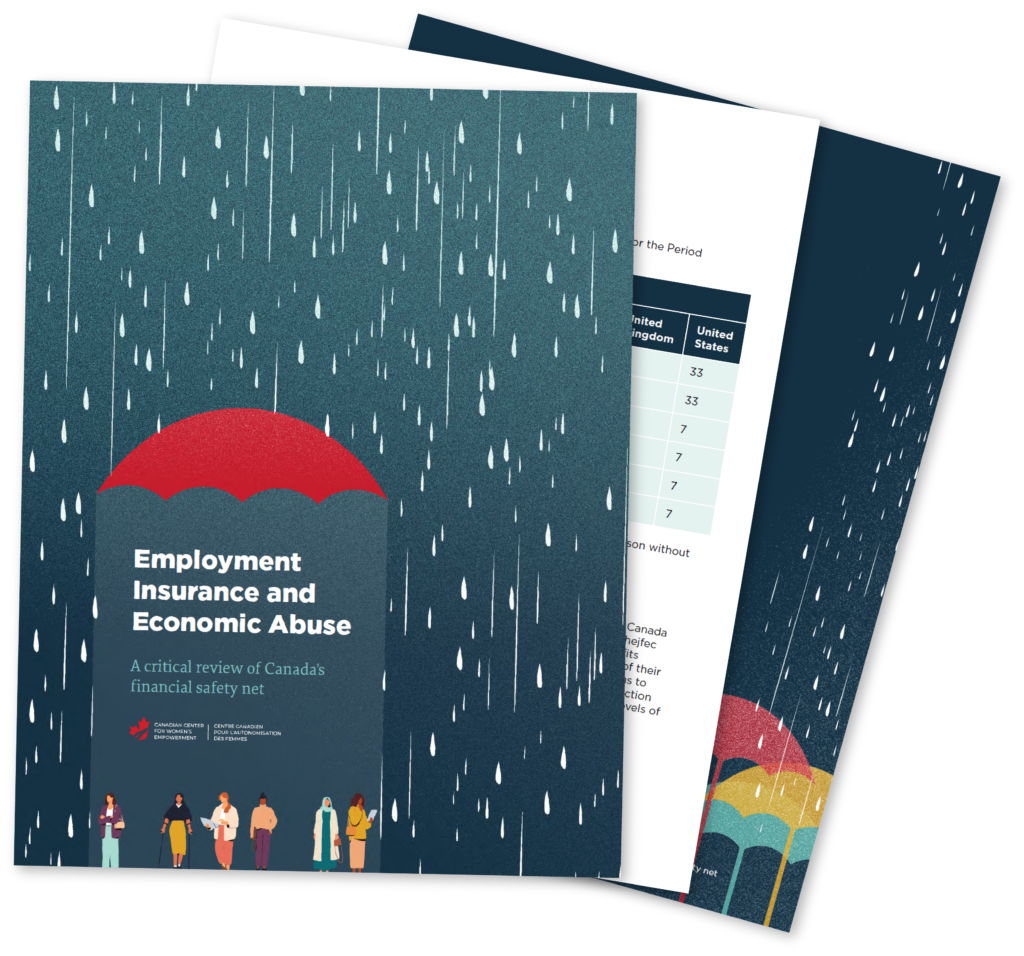
A Critical Review of Canada’s Financial Safety Net
For survivors of gender-based violence (GBV) and economic abuse, Employment Insurance (EI) can be the difference between staying in an unsafe situation and rebuilding an independent life. Yet CCFWE’s analysis finds the current system contains critical gaps that leave many survivors excluded or underserved.
Eligibility rules don’t reflect survivors’ realities. Rigid insurable-hour requirements fail to account for employment sabotage (when a person causing harm interferes with a person’s job through restricted transportation, withheld childcare, or harassment). These rules disproportionately affect women, who make up 65% of part-time workers.
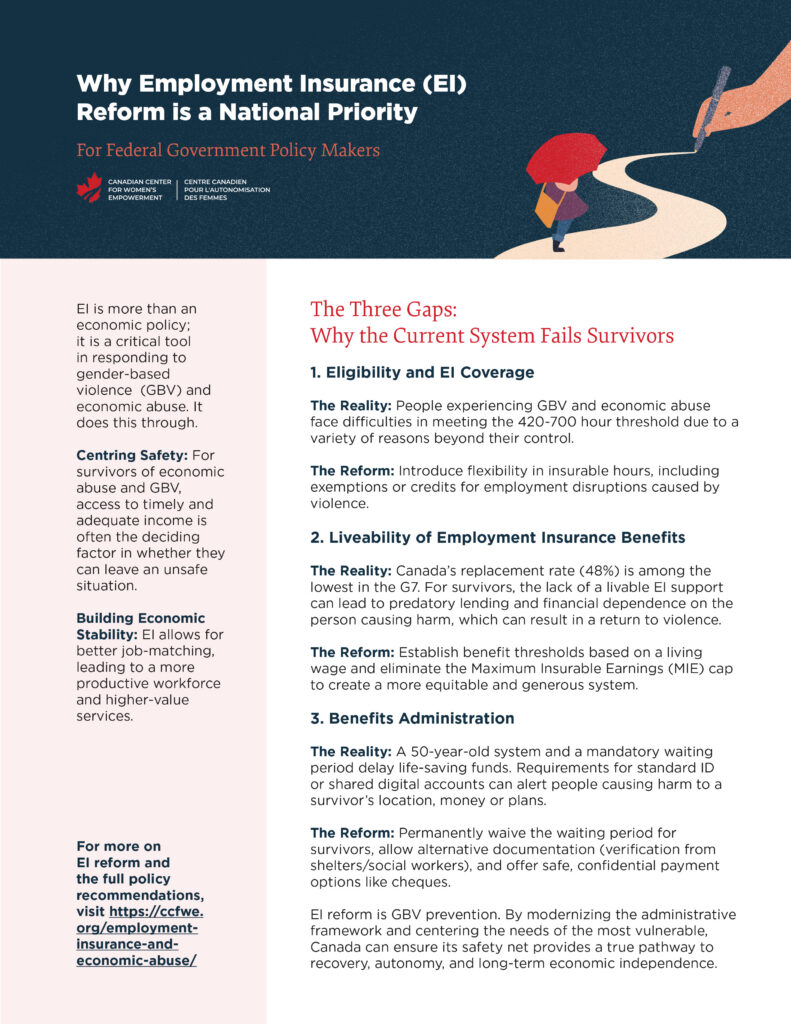
Benefits aren’t enough to live on. Canada’s EI replacement rate (48%) is the third-lowest in the G7, often leaving people below the poverty line and at greater risk of coerced debt.
The system is hard to access in a crisis. Outdated administration, a one-week waiting period, and ID requirements create delays — and for survivors whose devices or accounts are monitored, applying can mean risking surveillance and exposure.
CCFWE’s report concludes that EI reform is a public safety imperative. A modernized, trauma-informed system can offer survivors a genuine path to recovery and independence.

We’ve created tailored guides for the people and organizations best positioned to act on this research:
Recommendations for modernizing EI to close the gaps facing people experiencing GBV and economic abuse. Download the brief.
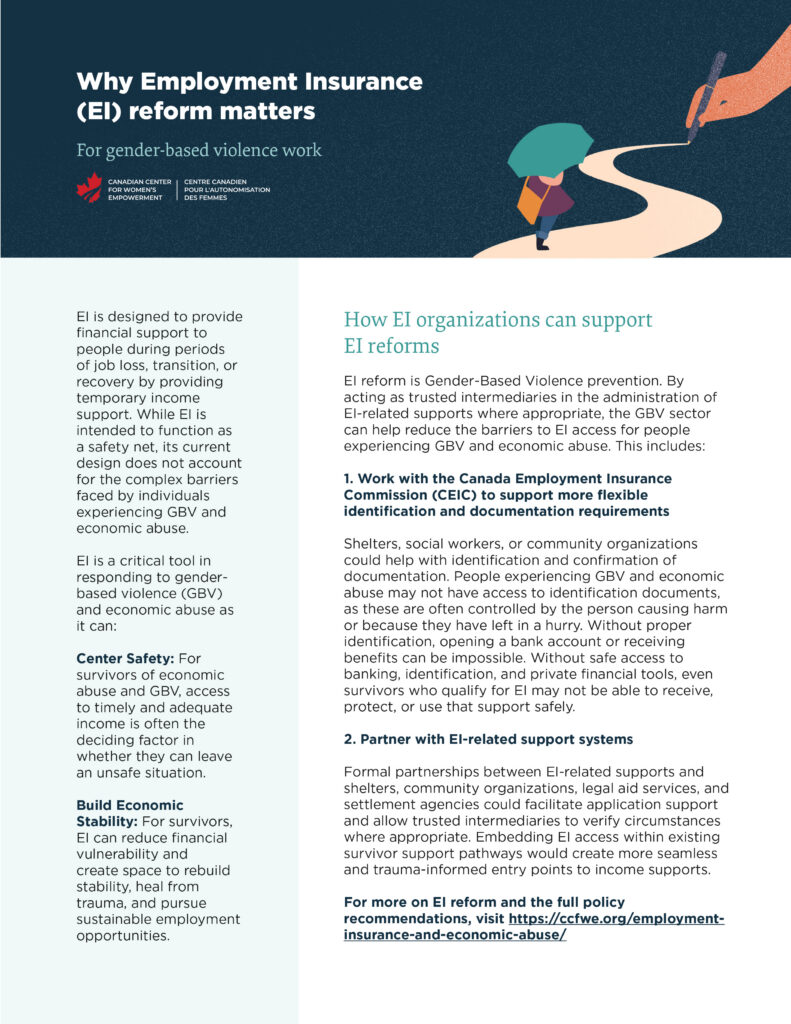
Guidance for systems change and frontline organizations working to reform EI access for people experiencing GBV and economic abuse. Download the brief.